
Contributing writer at Dade Schools.
- Table of Contents
- The Quick Answer: Cups in a Liter Explained
- Why Are There Two Types of “Cups”? (US Customary vs. Metric)
- The Ultimate Shortcut: Using a Digital Kitchen Scale
- A Practical Conversion Chart: Liters to Cups and More
- My Experience: From Confusing Recipes to Kitchen Confidence
- Common Mistakes to Avoid When Converting Measurements
- Beyond the Kitchen: Liters in School Science Projects
- Master Measuring for Your Family
- Frequently Asked Questions About Liters and Cups
Ever followed a recipe perfectly, only to have it turn out… wrong? You measured everything, you followed the steps, but the cake is dry or the soup is too thick. Often, the culprit is a tiny detail hidden in measurement conversion. If you’ve ever stared at a European recipe asking for a liter of broth and wondered how your US measuring cups stack up, you’re in the right place.
The short answer is this: There are approximately 4.23 US customary cups in a liter. For most recipes, you can round this to 4 and 1/4 cups. This simple conversion can be the difference between a kitchen success and a frustrating failure, especially when you have eager little helpers excited to see their creation turn out perfectly. (Source: U.S. National Institute of Standards and Technology)
Table of Contents
- The Quick Answer: Cups in a Liter Explained
- Why Are There Two Types of “Cups”? (US Customary vs. Metric)
- The Ultimate Shortcut: Using a Digital Kitchen Scale
- A Practical Conversion Chart: Liters to Cups and More
- My Experience: From Confusing Recipes to Kitchen Confidence
- Common Mistakes to Avoid When Converting Measurements
- Beyond the Kitchen: Liters in School Science Projects
- Master Measuring for Your Family
- Frequently Asked Questions About Liters and Cups
The Quick Answer: Cups in a Liter Explained
Let’s get straight to the point so you can get back to your recipe. The exact number depends on which “cup” you’re using, a detail most people miss.
A liter is a unit of volume in the metric system, defined as 1,000 milliliters (ml). The cup, however, isn’t as straightforward. The United States uses the customary system for most cooking measurements.
Here is the definitive answer for your kitchen conversions:
- 1 Liter = 4.22675 US Customary Cups. For cooking, this is rounded to 4.23 cups or, more practically, 4 and 1/4 cups.
- 1 Liter = 4 Metric Cups. The metric cup is standardized at 250 ml, making the math beautifully simple.
So, if you’re using a standard American measuring cup (like the Pyrex one in your cabinet), 4.23 is your number. If you’re using a metric-based recipe from another country, they likely mean the 250 ml cup, making the math a clean 4 cups.
Why Are There Two Types of “Cups”? (US Customary vs. Metric)
This is where most of the confusion comes from. The world largely operates on the metric system, which is simple and based on powers of 10. The United States, along with only two other countries, primarily uses the US customary system, which has its roots in British imperial units.
- US Customary Cup: This is the standard in American recipes. It is 1/16th of a US gallon, which works out to about 236.59 ml. This is the one we use for our 4.23 conversion.
- US Legal Cup: To add a bit of confusion, the cup used for nutrition labeling in the US is legally defined by the FDA as exactly 240 ml. It’s close, but not identical, to the customary cup.
- Metric Cup: Used in Australia, Canada, the UK, and much of the world, the metric cup is standardized to 250 ml. Four of these make exactly 1,000 ml, or one liter. No weird decimals.
The Ultimate Shortcut: Using a Digital Kitchen Scale
Want to bypass the confusion of cups and milliliters entirely? Use a digital kitchen scale. Professional bakers and cooks measure ingredients by weight (grams) instead of volume because it is far more accurate and consistent. A cup of flour can vary in weight depending on how it’s scooped, but 120 grams is always 120 grams.
For liquids like water or milk, the conversion is simple: 1 ml of water weighs 1 gram. So, one liter (1,000 ml) of water is equal to 1,000 grams (1 kilogram). A scale eliminates guesswork and is the single best tool for improving your baking.
Enjoying this article?
Weekly school guides delivered free.
A Practical Conversion Chart: Liters to Cups and More
Bookmark this page or screenshot this chart. It’s a lifesaver when you’re mid-recipe with flour on your hands. This chart uses the standard US Customary Cup (~236.6 ml).
| Liters (L) | US Customary Cups (approx.) | Milliliters (ml) | Fluid Ounces (fl oz) |
|---|---|---|---|
| 1/4 Liter | 1.06 cups (about 1 cup) | 250 ml | 8.5 fl oz |
| 1/2 Liter | 2.11 cups (about 2 cups + 2 tbsp) | 500 ml | 16.9 fl oz |
| 1 Liter | 4.23 cups (about 4 1/4 cups) | 1,000 ml | 33.8 fl oz |
| 1.5 Liters | 6.34 cups (about 6 1/3 cups) | 1,500 ml | 50.7 fl oz |
| 2 Liters | 8.45 cups (about 8 1/2 cups) | 2,000 ml | 67.6 fl oz |
| 3 Liters | 12.68 cups (about 12 2/3 cups) | 3,000 ml | 101.4 fl oz |
My Experience: From Confusing Recipes to Kitchen Confidence
I remember this issue clearly from a few years ago. My son, then in 4th grade, and I were trying a recipe for Brazilian cheese bread we found online. The recipe called for “1/2 liter of milk.” Being a confident American cook, I measured out 2 cups. The dough was sticky and almost soupy. It was a mess.
After some frantic searching, I realized the Brazilian recipe was using metric measurements. Half a liter is 500 ml. My two US cups were only about 473 ml. That missing 27 ml—just under two tablespoons—was enough to ruin the consistency. We added a bit more flour to save it, but it was a great lesson. Now, we always double-check the origin of a recipe. It’s a small step that has saved us from many similar frustrations.
Common Mistakes to Avoid When Converting Measurements
Knowing the conversion is one thing; applying it correctly is another. Here are a few common pitfalls to avoid.
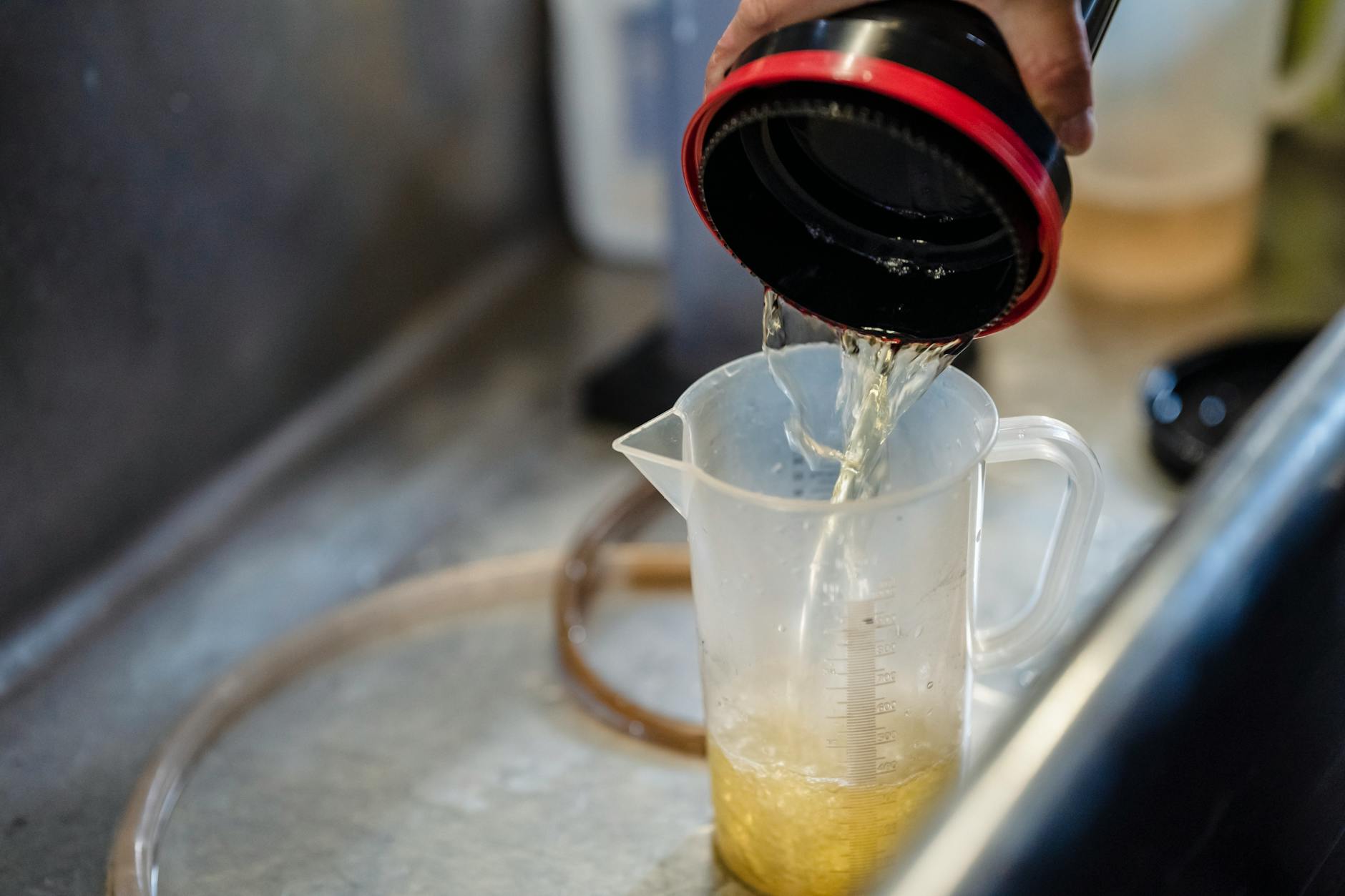
- Using Dry Cups for Liquids: Never use a dry measuring cup (the kind you level off with a knife) for liquids. You won’t get an accurate reading because you can’t fill it to the absolute brim without spilling. Use a clear glass or plastic measuring cup with a spout and measurement lines below the rim to get an accurate reading at eye level.
- Confusing Fluid Ounces and Weight Ounces: This is a big one. A US fluid ounce is a measure of volume (about 29.57 ml), while a standard ounce is a measure of weight. A cup of water weighs about 8.3 ounces, but it contains 8 fluid ounces. They are not the same thing, and mixing them up can derail a recipe. Liters are always a measure of volume.
Beyond the Kitchen: Liters in School Science Projects
Understanding liters isn’t just for cooking. As a parent, you’ll see this unit pop up in schoolwork all the time. Science fair projects, chemistry homework, and even math problems often use the metric system. Knowing that a 2-liter soda bottle is a great tool for measuring larger volumes can be a handy trick for at-home experiments. Explaining that a liter is 1,000 milliliters helps kids grasp the base-10 nature of the metric system, a foundational concept for any future science student.
Master Measuring for Your Family
While the US customary system is what many of us grew up with, the rest of the world runs on metric. Understanding how to convert liters to cups is a practical skill that bridges that gap. For quick and easy cooking, remember 1 liter is about 4 and 1/4 US cups. For precision, especially in baking, nothing beats a digital kitchen scale. By keeping these simple rules in mind, you can tackle any recipe with confidence and turn potential kitchen mishaps into delicious successes.
Frequently Asked Questions About Liters and Cups
- How many US cups are in 2 liters?
- There are approximately 8.45 US customary cups in 2 liters. A standard 2-liter soda bottle contains about 8 1/2 cups.
- Is a UK cup the same as a US cup?
- No, they are different. A US customary cup is about 236.6 ml. A modern UK cup is typically a metric cup, 250 ml. However, older UK recipes may use an imperial cup, which is about 284 ml. Always check the recipe’s origin.
- Why is weighing ingredients more accurate than using cups?
- Weighing is more accurate because it measures mass, which is constant. Volume, measured by cups, can change based on factors like how densely an ingredient is packed or the humidity in the air. For example, a cup of sifted flour weighs less than a cup of packed flour, which can ruin a delicate recipe.
- Can I use this conversion for dry ingredients like flour or sugar?
- No. Liters and cups are units of volume, not weight. A liter of flour will weigh much less than a liter of water. While you can technically measure a liter of flour by volume, recipes for dry goods are most accurate when using weight (grams or ounces) or the specific volume measurements (cups, tablespoons) called for in the recipe. Do not convert a recipe’s weight measurement for flour into a liquid volume measurement.




Contributing writer at Dade Schools.